A Video Recap
Atlanta Was Already Mid-Conversation
This report was co-authored by Jasmine Burton, Brian Goebel, Joey Shea, Jeff Shibata, and a collective of over 50+ Atlanta-based students from Emory University and Georgia Tech. The 2026 Emory Climate Design Challenge was made possible by the Reilly Family Fund.

June 2026
Before the Challenge officially began, Atlanta was already mid-conversation.
Not simply about the 2026 World Cup itself, but about what happens when a growing city is asked to evolve in real time under the pressure of global visibility, accelerated infrastructure investment, and increasingly interconnected systems.
Those tensions were visible across the city. Traffic patterns around downtown were constantly shifting, MARTA riders redirected, sidewalks temporarily closed as construction projects accelerated in preparation for hosting 8 World Cup matches beginning on June 15th. Delivery systems were navigating increasingly compressed urban corridors, while sanitation crews adjusted routes and schedules around congestion, road closures, and changing event infrastructure.
At the same time, another realization was becoming increasingly difficult to ignore: climate is not a standalone environmental sustainability issue and should not be approached as such.
Climate shapes transportation systems, procurement decisions, logistics operations, public infrastructure, governance structures, economic and community development strategies, and everyday human behavior. The systems underneath the city were becoming more visibly interconnected, yet most civic and corporate institutions continued to operate as though those systems could be managed independently.
This was not simply a city working to become “World Cup Ready.”
It was a city revealing the vulnerabilities and opportunities of interconnected systems in real time.
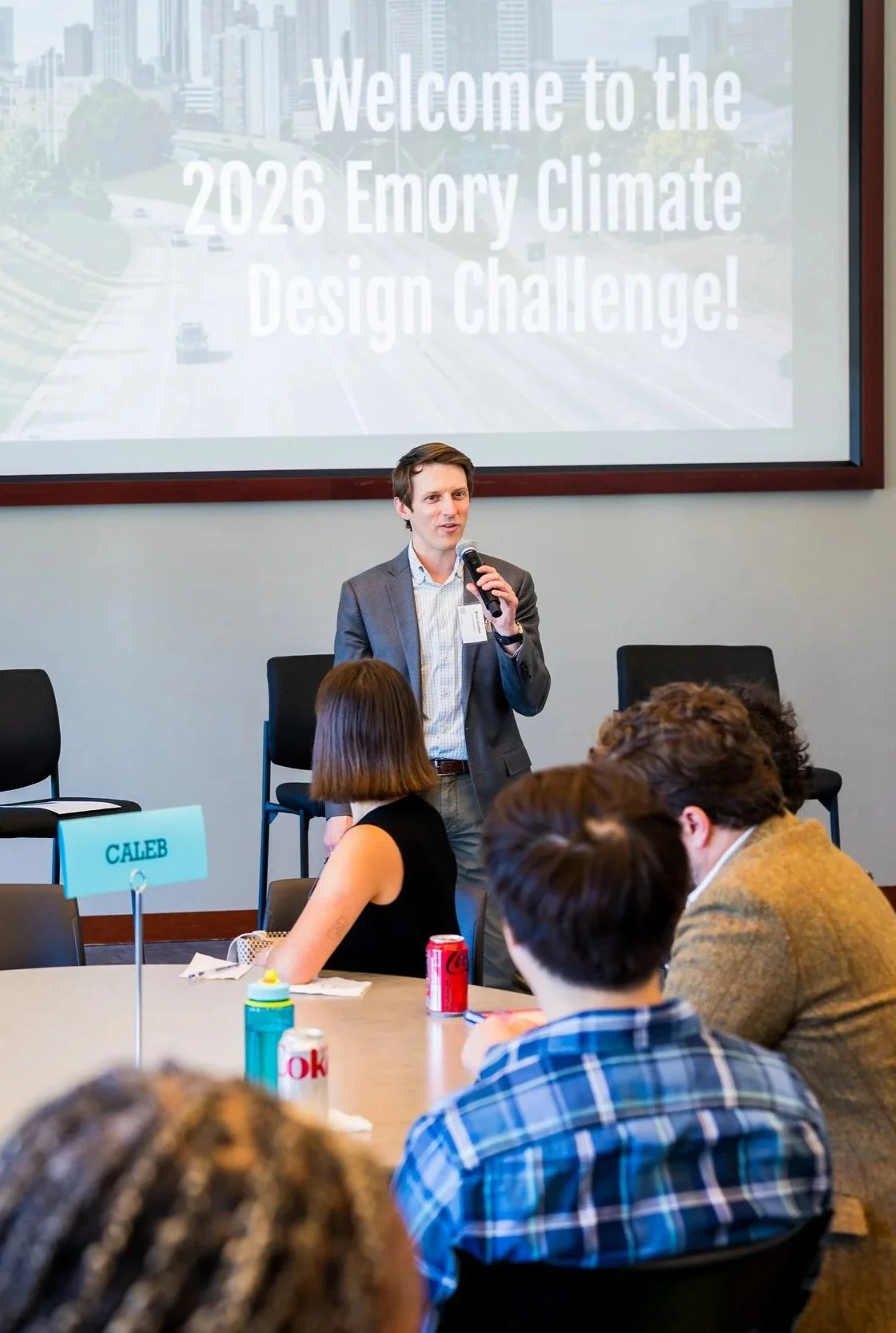
That realization became the starting point for the inaugural Emory Climate Design Challenge, hosted by Goizueta’s Business & Society Institute.
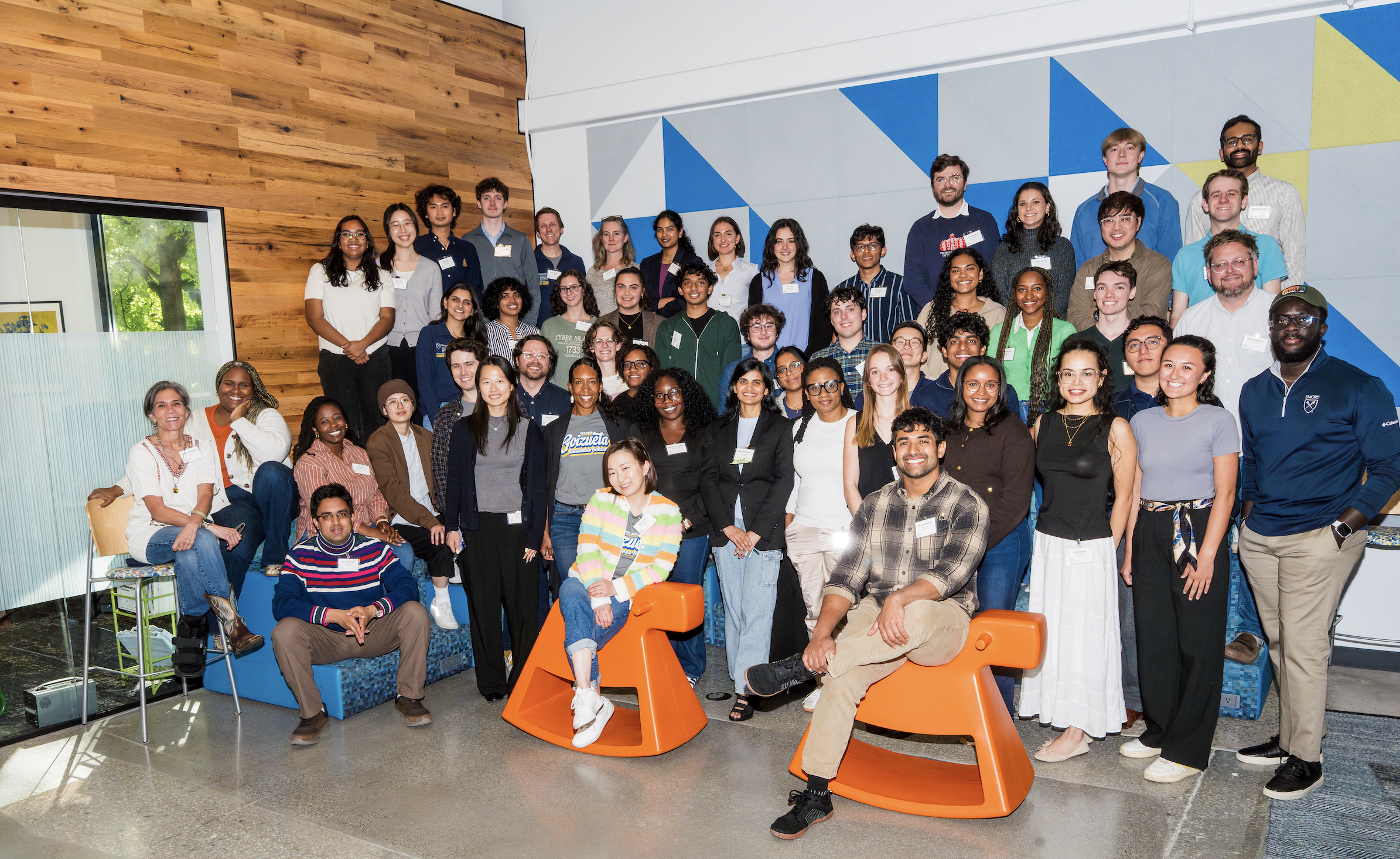
On April 10-11 2026, more than 50 students from Emory University and Georgia Institute of Technology came together alongside sustainability practitioners, operators, researchers, designers, policy thinkers, and civic leaders to explore a more difficult question:
How might Atlanta use the 2026 World Cup to strengthen climate-smart, circular systems that deliver long-term value for people, place, and planet?
The Challenge was intentionally designed not as a traditional case competition or entrepreneurship pitch day, but as an immersive systems-thinking laboratory rooted directly in a fictionalized version of Atlanta at this moment in time.
Because large-scale global events do not simply showcase cities. They create openings for new forms of civic imagination, collaboration, and systems change.
Designing Across Complexity and Navigating Tension
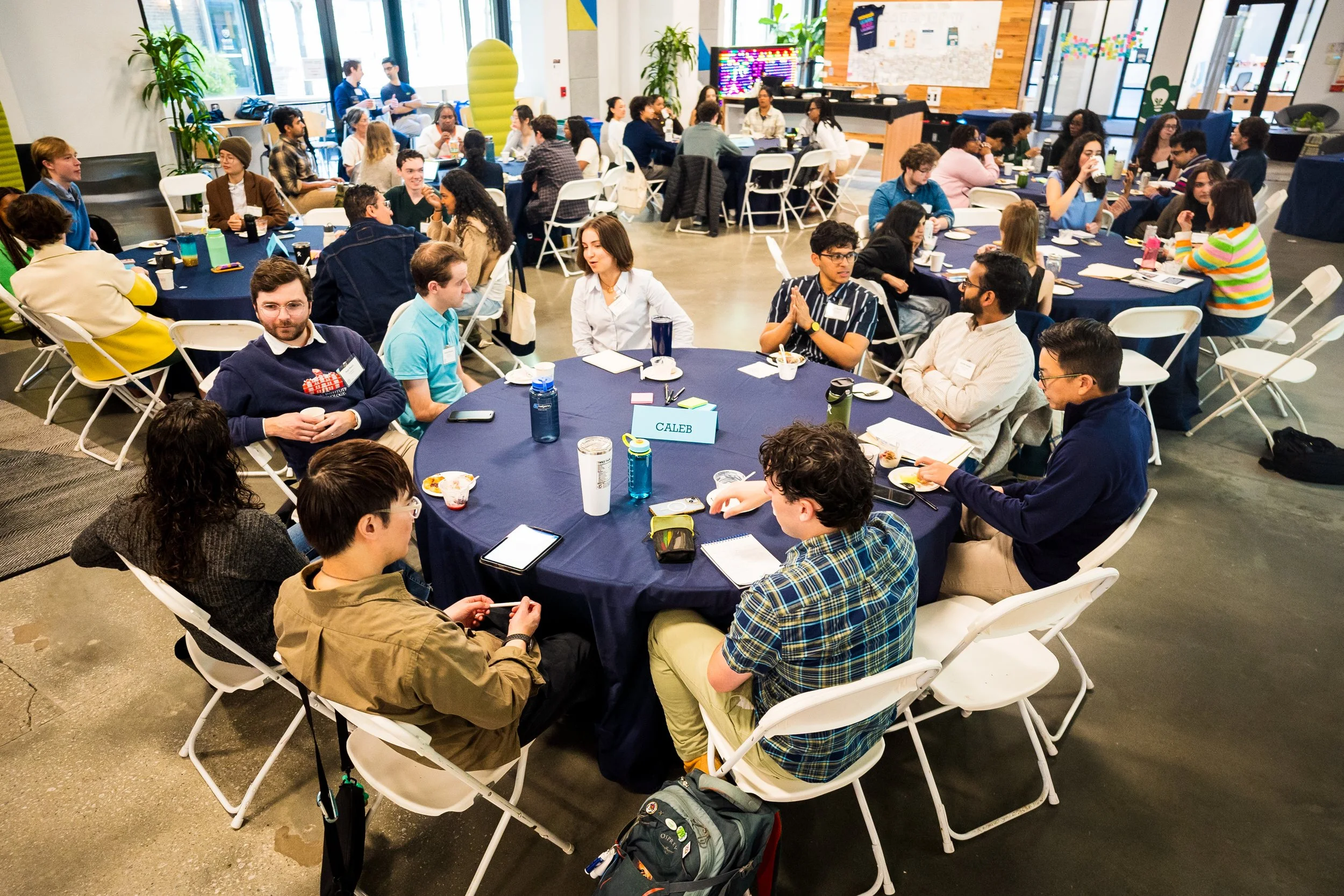
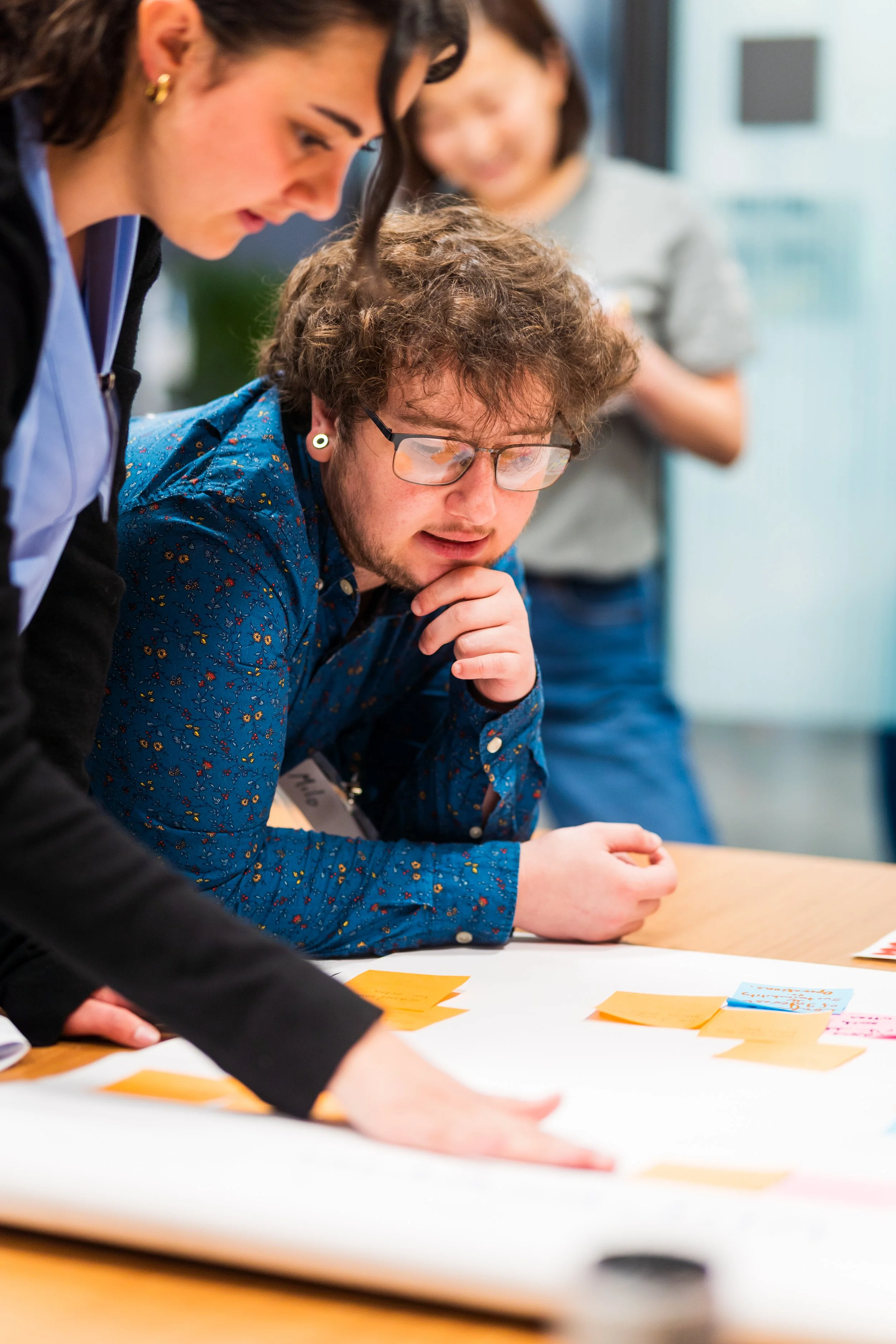
The Challenge intentionally brought together participants who would not normally work beside one another. Engineering students worked alongside public health researchers, while designers collaborated with business strategists and public policy students mapped systems with technologists. Graduate and undergraduate students navigated ambiguity together while bringing different perspectives on infrastructure, sustainability, and systems change.
51% of participants came from Emory.
49% came from Georgia Tech.
34% were undergraduate students.
66% were graduate students.
This interdisciplinary approach was intentional. As Atlanta prepares for the 2026 FIFA World Cup and other future challenges, the systems shaping the city are becoming increasingly interconnected and complex. Transportation, public health, waste management, infrastructure, emergency response, and economic opportunity do not operate independently.
A disruption in one system can create ripple effects across many others. Building a climate-smart future therefore requires more than expertise in a single field. It requires leaders who can understand how systems interact and collaborate across disciplines to design resilient solutions.
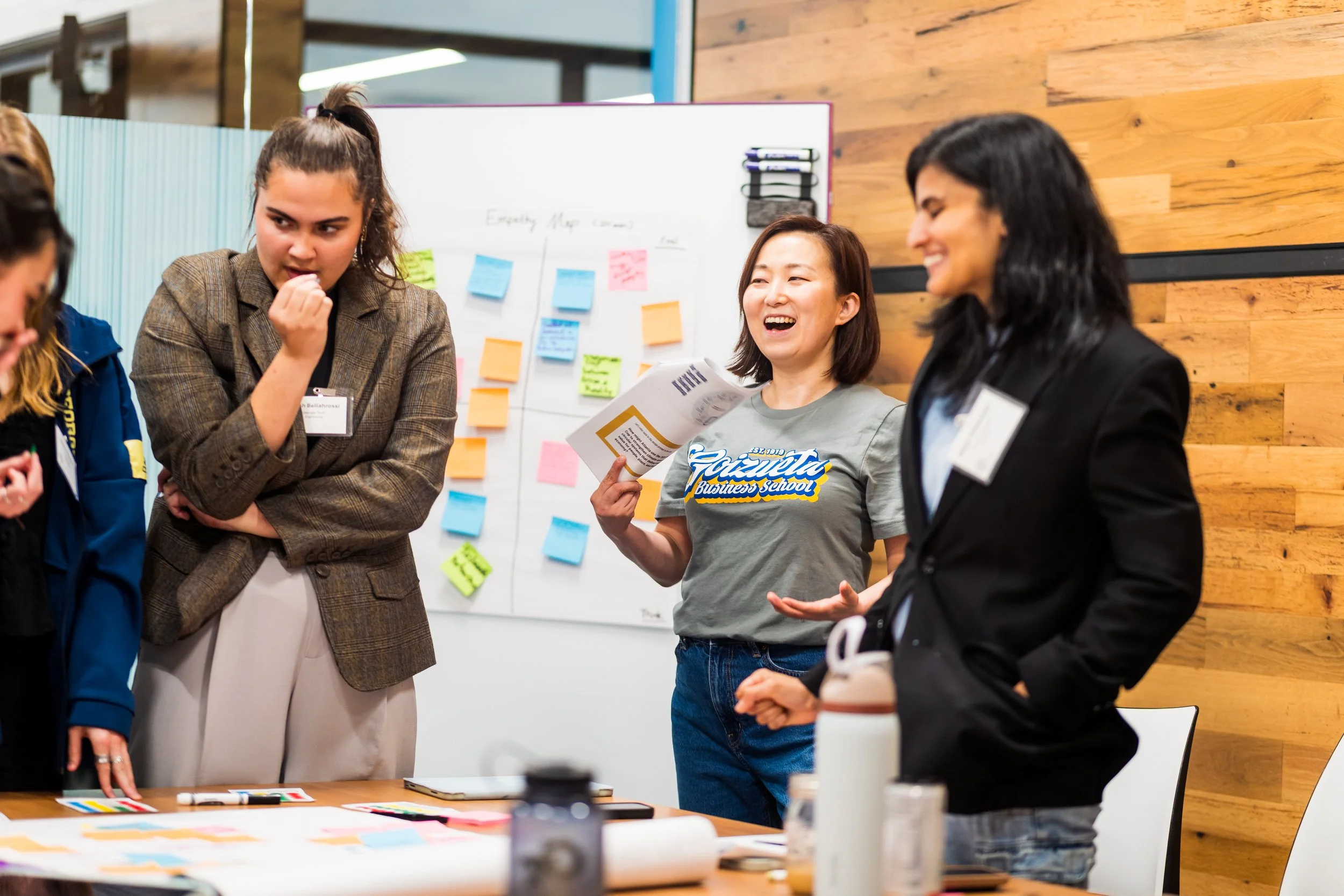
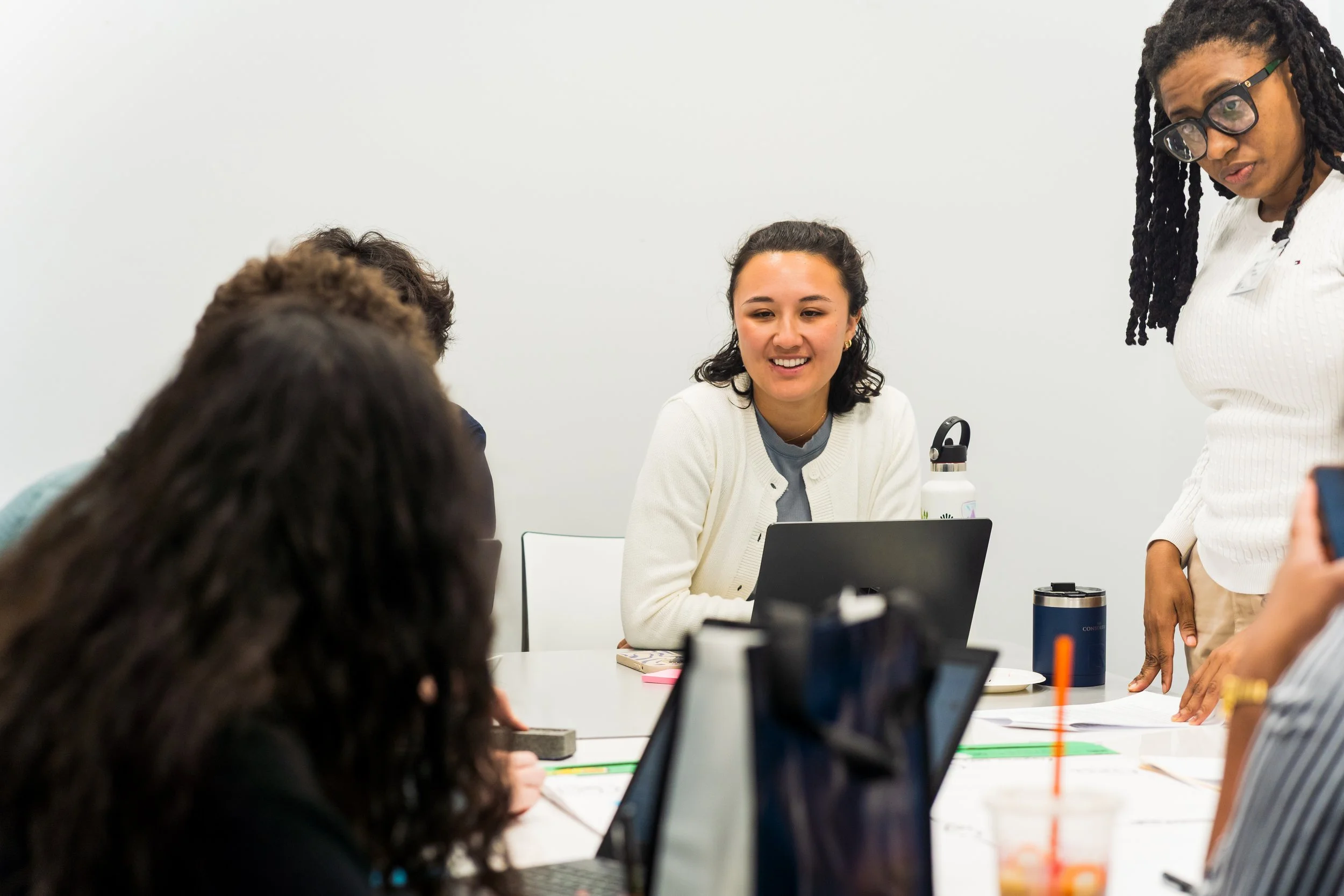
Over two days, participants practiced working across those intersections together. They broke bread together, mapped systems together, debated tradeoffs together, and prototyped futures together. Many participants entered the workshop with deep expertise in one discipline but quickly realized that no single field could fully explain the complexity of the challenges they were exploring.
As one member of the facilitation team reflected, "We were able to build brand new connections across two amazing universities here in Atlanta, bringing together students from Emory and Georgia Tech to learn, collaborate, and imagine alongside one another."
The Challenge was designed to strengthen participants' climate-smart capabilities by expanding their ability to think systemically, work collaboratively, and navigate the interconnected futures shaping Atlanta.
A Fictional City That Felt Deeply Familiar
To ground the experience in operational reality rather than abstraction, the workshop centered around a fictionalized, but deeply research-informed, case study titled A City in Motion, A Moment to Shape It.
Authored by experience design and workshop lead, Jasmine Burton, the case unfolded inside Junction Commons, a fictional civic coordination hub in South Downtown where interdisciplinary civic, community, academic, and private-sector leaders gathered to prepare Atlanta for the mounting pressure of the World Cup. Their challenge was not only to welcome visitors to the city, but also to explore how this moment could catalyze a more resilient, climate-smart future for residents long after the tournament concluded.
Importantly, the case resisted easy villains.
There was no singular bad actor, broken technology, or catastrophic system failure. Instead, participants encountered systems behaving exactly as they had been designed to behave. Transportation systems had been optimized for movement but were increasingly strained under density. Waste systems depended heavily on timing and behavior. Circular economy ambitions repeatedly collided with fragmented governance structures and uneven access across communities.
At the center of the case sat six fictional characters, each representing a different perspective on Atlanta’s evolving sustainability ecosystem and the tensions that emerge when complex systems intersect. Some focused on infrastructure and mobility, others on resource recovery, circularity, market incentives, community access, and operational logistics. Each character could clearly see one part of the system, but none could fully see the whole.
That distinction became foundational to the Challenge itself because the workshop was less interested in identifying broken parts than in revealing the friction that emerges when independently functioning systems are suddenly forced to operate together at scale.
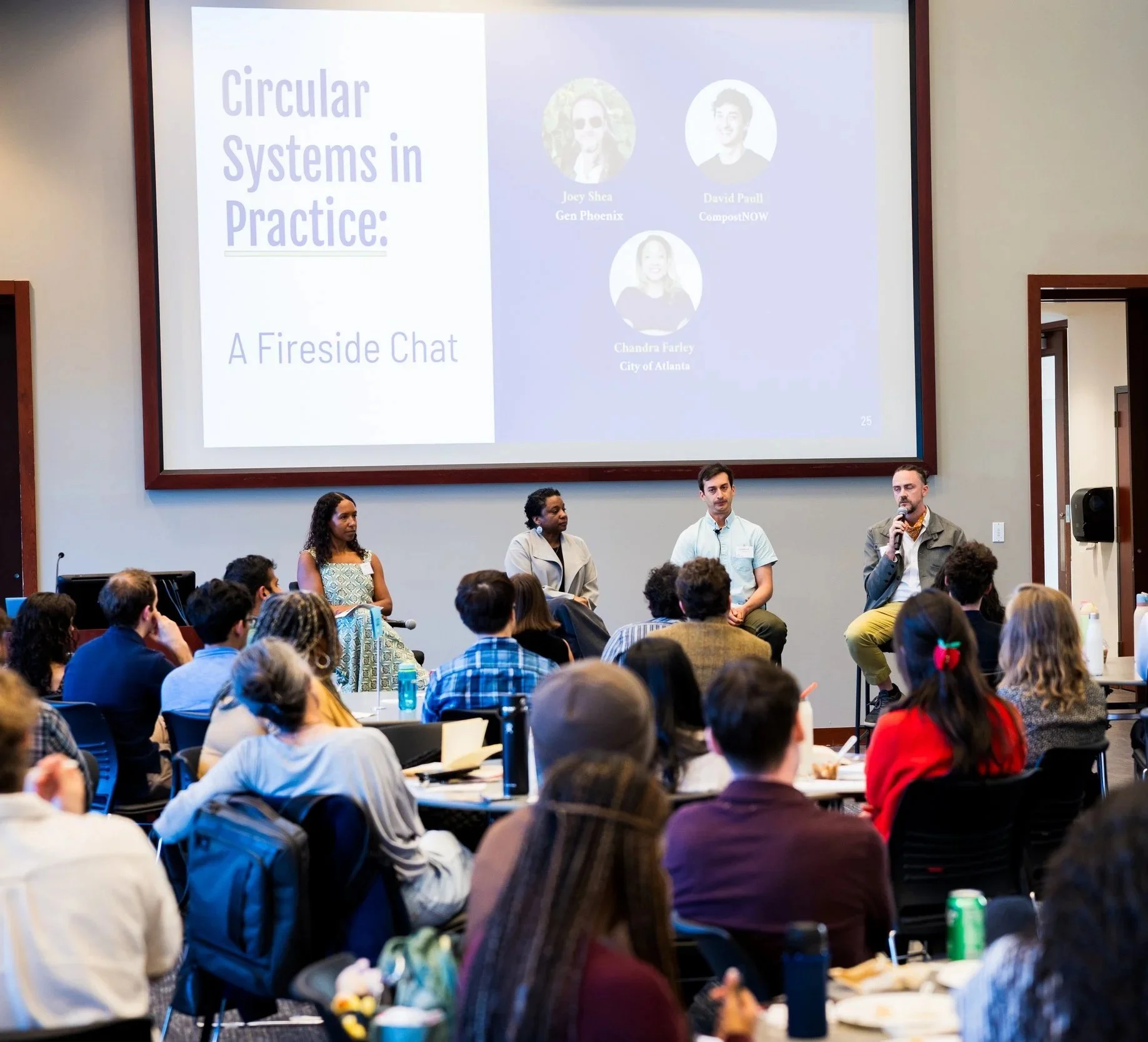
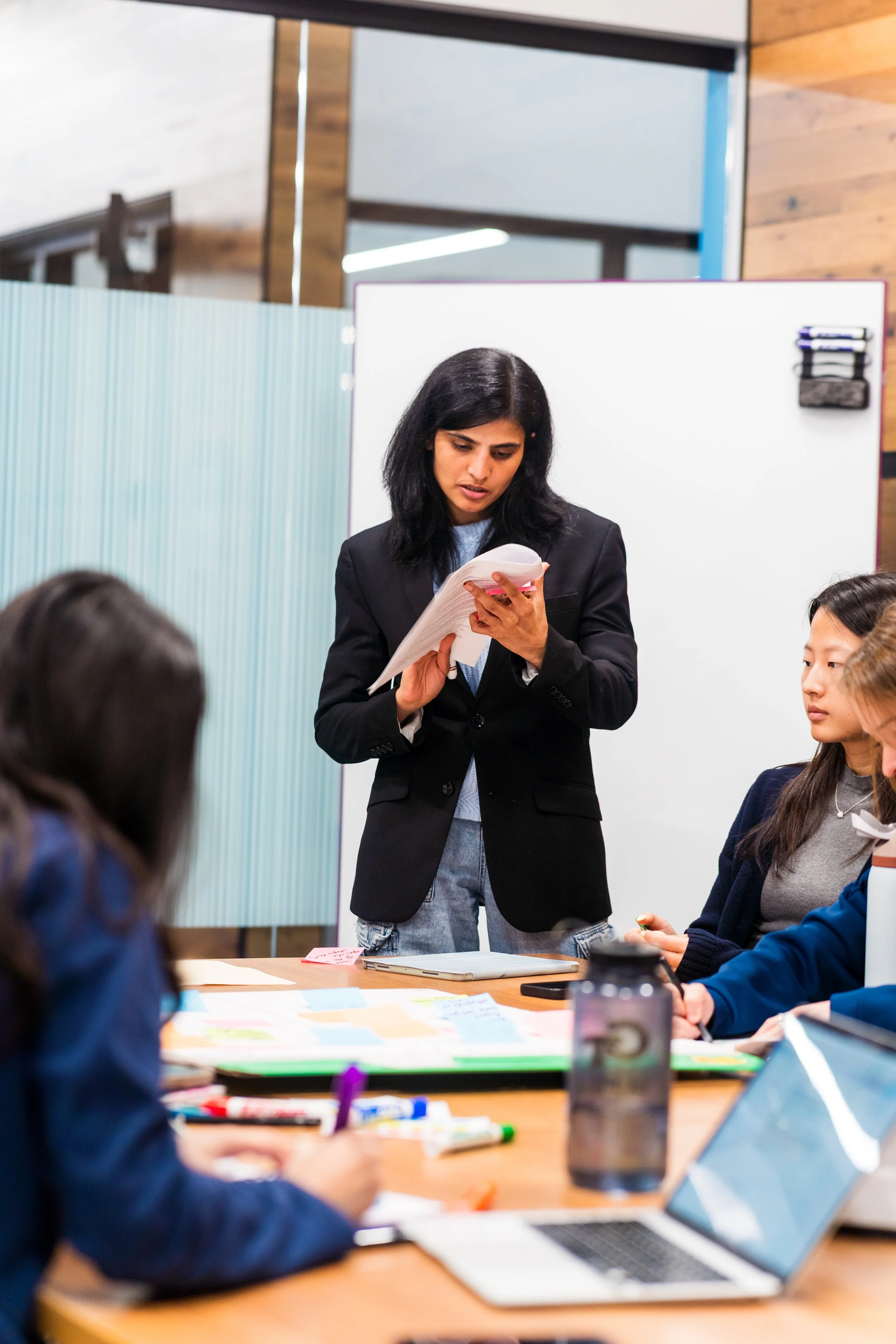
To help participants navigate that complexity, the Challenge was supported by local “luminaries” whose work sits at the intersection of sustainability, infrastructure, circularity, climate justice, operations, and systems innovation across Atlanta. Joey Shea (a career sustainability business leader), David Paull (a circularity entrepreneur), Titiksha Fernandes (a circular systems scholar), Chandra Farley (a city-wide public sector sustainability leader), and Roxanne Porch (a corporate sustainability leader) participated throughout the experience as practitioners, mentors, and thought partners.
Rather than presenting polished keynote-style solutions, these leaders surfaced tensions, tradeoffs, and unintended consequences from their own work across Atlanta’s evolving sustainability ecosystem. Their stories helped participants understand that climate-smart transformation is rarely linear. It is negotiated across timelines, departments, incentives, politics, budgets, and behaviors that do not naturally align.
Again and again, participants returned to one central realization: Most climate-smart solutions already exist and the larger challenge is coordination.
As one facilitator reflected: “There’s no single thing that creates positive environmental change. No single policy, no single actor, no single government, no individual. It is a swarm form of activity under shared goals moving together.”That idea became foundational to the experience itself.
Real climate-smart transformation behaves more like a swarm because it emerges through relationships, coordination, distributed leadership, and systems learning how to move together rather than independently.
Futures Emerging Through Design Levers
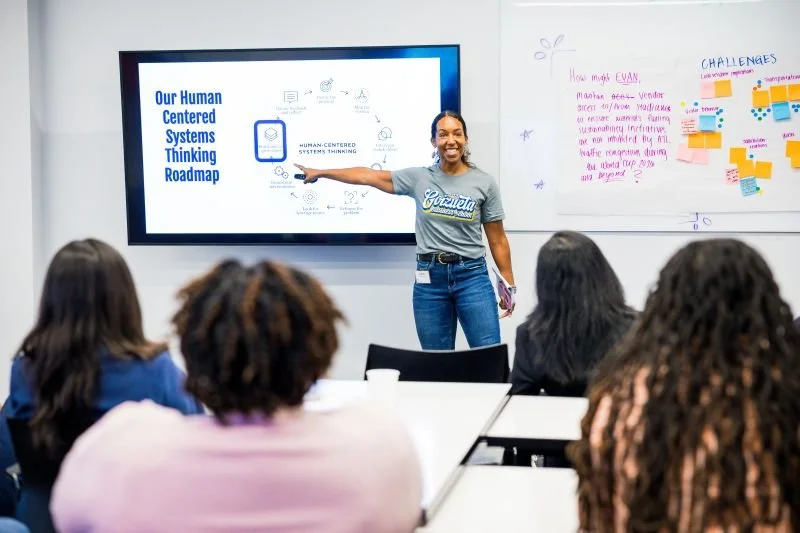
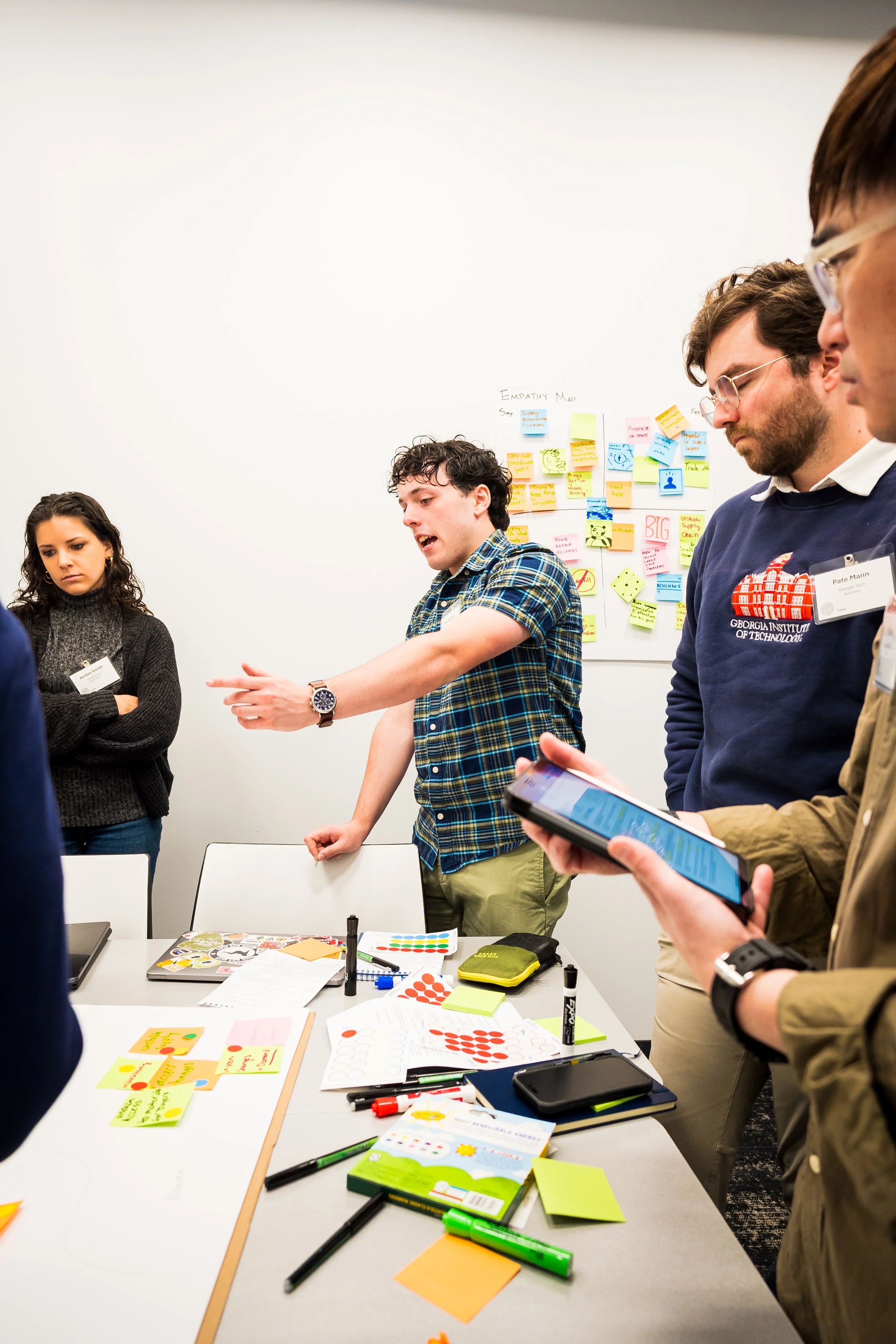
Throughout the weekend, participants engaged in systems mapping, stakeholder analysis, empathy mapping, leverage-point identification, futures thinking, and rapid prototyping exercises grounded in IDEO’s Human-Centered Systems Thinking framework.
The walls of Emory’s Innovation Center, The Hatchery, transformed into ecosystems of sticky notes, systems maps, tensions, future-state sketches, feedback loops, and speculative infrastructure ideas. Students continuously moved between emotional realities and structural realities as they worked to understand how individual experiences connect to larger systems behavior. The challenge did not ask participants to predict the future. It asked them to work in small groups to prototype conditions capable of making different futures possible.
Here are some of the human-centered systems prototypes based on the 6 characters and recommendations that emerged:
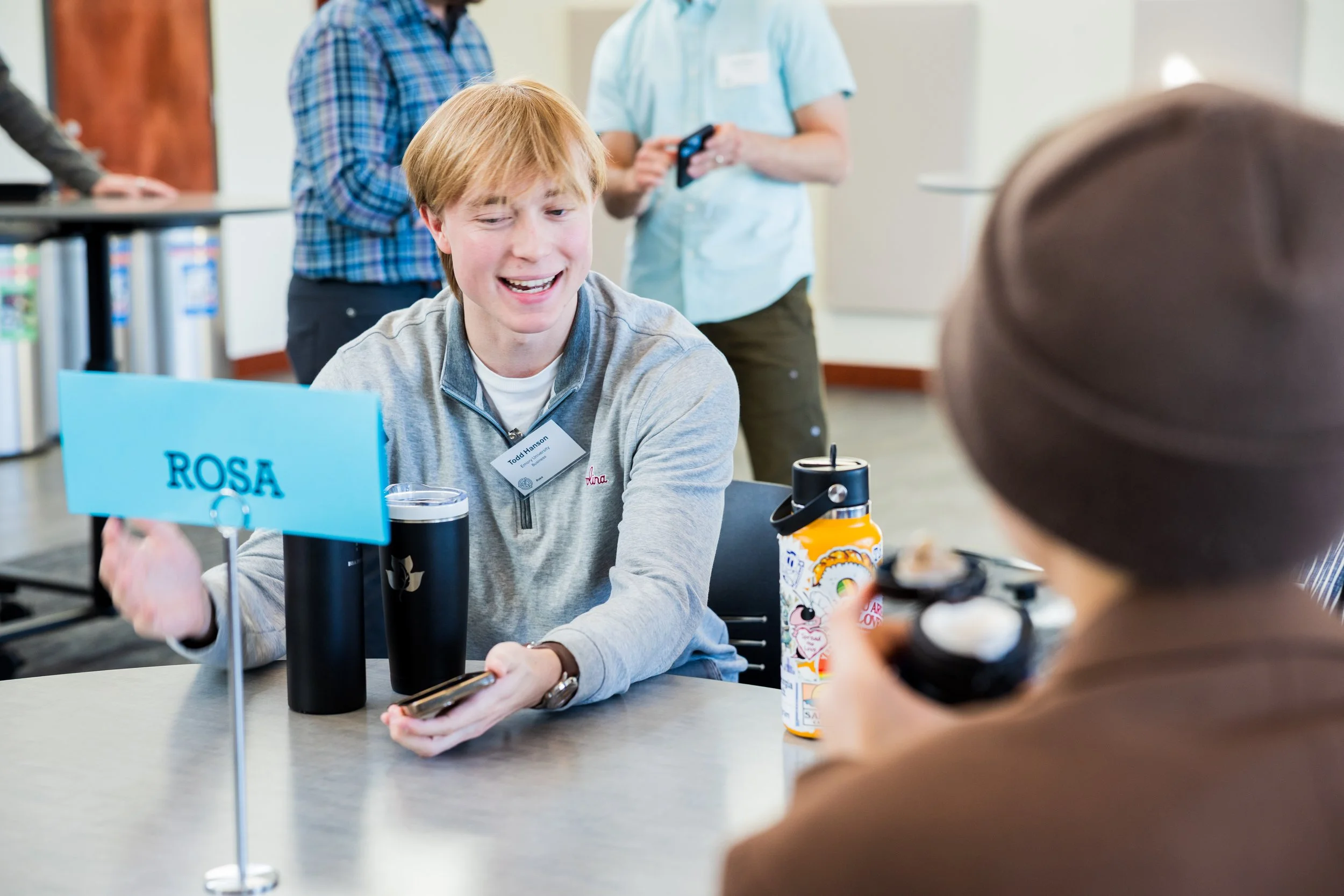
Rosa represented the fragility and interdependence of Atlanta’s food recovery and composting ecosystem. Her challenge centered on timing, access, and behavioral coordination inside a rapidly changing urban environment.
The team’s guiding question became:“How might Rosa improve the waste management system to account for the access, timing, and behaviors Atlanta faces today, will face during the 2026 World Cup, and beyond?”
Students identified optimization as the central leverage point. Prototype concepts included coordinated routing systems between waste generators, local governments, farmers, gardeners, and sanitation systems, along with improved communication tools to reduce missed pickups, traffic delays, and underutilized waste streams.
Rosa: Optimizing Circular Waste Systems Under Pressure
The team imagined a future where composting systems operate less like isolated services and more like responsive regional infrastructure networks capable of adapting dynamically to changing city conditions.
The Rosa team also surfaced broader implications for the city’s climate-smart future. Researchers and entrepreneurs have opportunities to explore adaptive logistics systems, dynamic routing infrastructure, and compost coordination tools that have the ability to improve visibility and interoperability across fragmented ecosystems.
City leaders could pilot more integrated food recovery and sanitation coordination systems ahead of the World Cup rather than treating waste infrastructure as isolated operations.
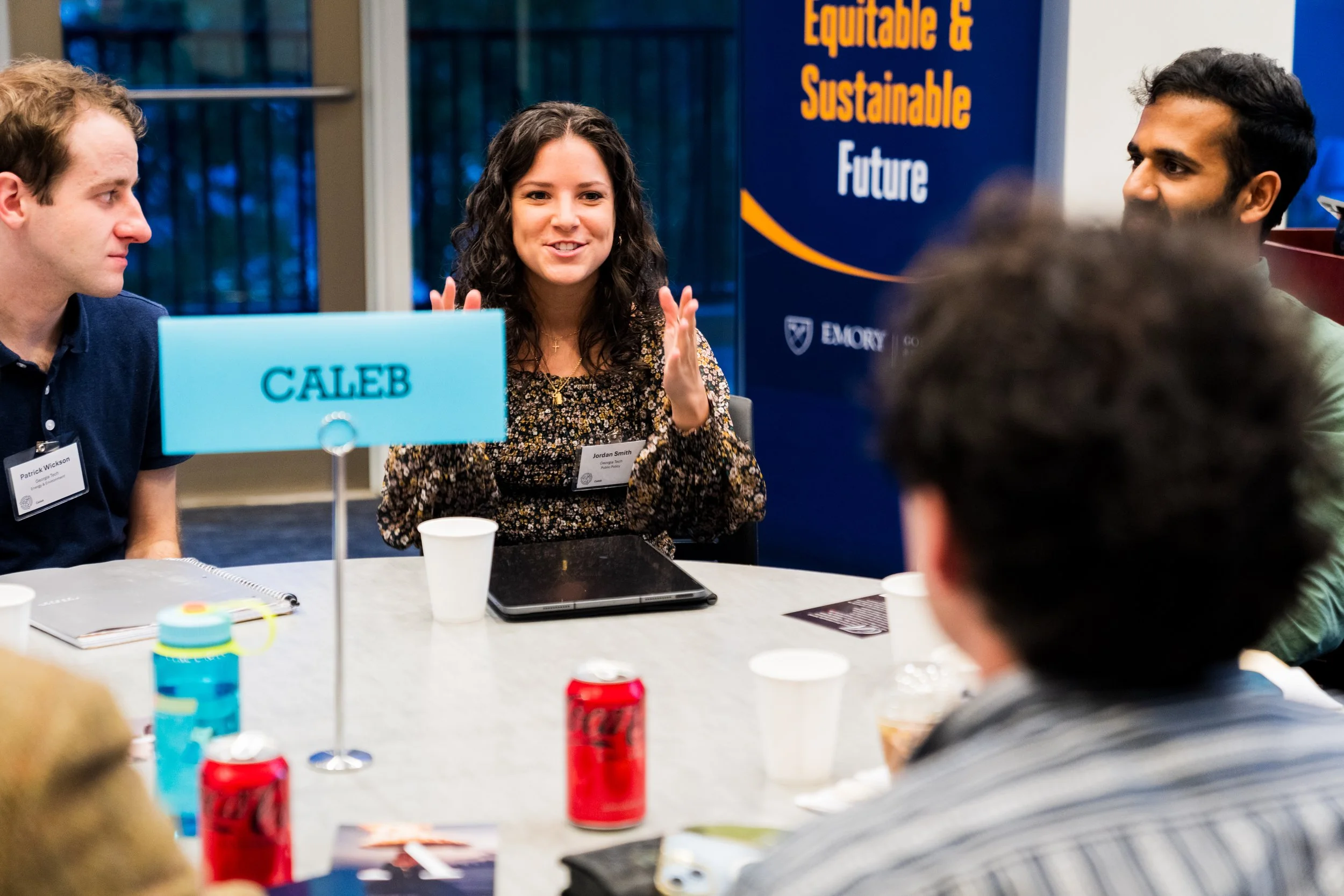
Caleb represented Atlanta’s grassroots reuse and recovery ecosystem, where valuable materials often disappear into landfills because stakeholders lack shared visibility and coordination.
The team’s central question asked: “How might Caleb use the World Cup to strengthen coordinated, resilient waste solutions for Atlanta communities and businesses?”
Students identified two core design levers:
1) A categorization and educational guide designed to improve communication between suppliers, waste generators, recovery organizations, and communities.
2)An app or digital platform connecting construction companies, neighborhoods, developers, and local businesses to reduce bottlenecks and improve accessibility to reusable materials.
Caleb: Creating Visibility Across Fragmented Material Networks
The prototypes emphasized accessibility, multilingual communication, landfill diversion, and relationship-building between historically disconnected actors.
The Caleb team envisioned a future where circular systems are not hidden expertise accessible only to insiders, but visible public infrastructure embedded into the everyday operations of the city.
Their work also highlighted opportunities for sustainability entrepreneurs and circular economy builders to focus less on creating entirely new products and more on improving coordination, accessibility, and material visibility across systems already operating side-by-side.re as isolated operations.
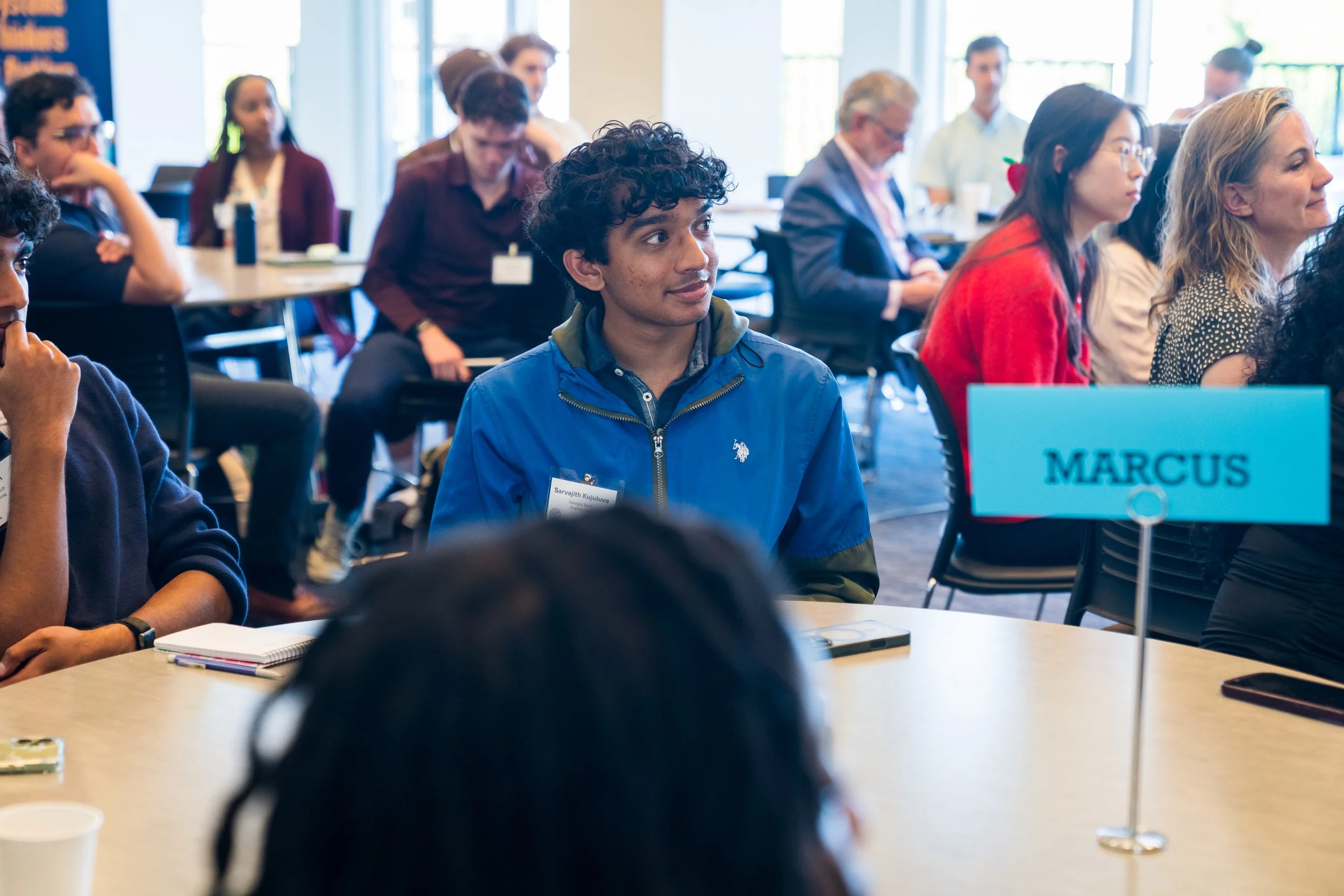
Marcus represented the tensions between sustainability ambition and market behavior. His team focused heavily on incentives, procurement systems, and the behavioral dynamics shaping circular adoption across industries.
Their guiding question asked:“How might we leverage processes and incentives during the World Cup to create lasting behaviors to reduce materials use and waste across the value chain?”
Students explored ideas including grant pools for circular businesses, quarterly sustainability reporting systems, incentives for reusable materials adoption, and partnerships connecting local businesses to circular economy markets. The Marcus team repeatedly returned to one core realization: circular systems do not scale through intention alone. They scale when incentives, behaviors, policy structures, and operational realities become aligned.
Marcus: Aligning Incentives Across the Circular Economy
Their future vision imagined Atlanta using the World Cup not simply as an event, but as a forcing function for testing procurement systems and incentive structures capable of accelerating long-term regional circularity.
The team’s work also challenged corporate sustainability leaders to rethink sustainability as operational infrastructure rather than a parallel initiative. Procurement systems, vendor coordination, and logistics networks repeatedly surfaced as some of the most important climate levers inside large organizations.
These corporate changes and the shifts in local economic systems could lead to sustained culture change as they build consistent behavior over time..
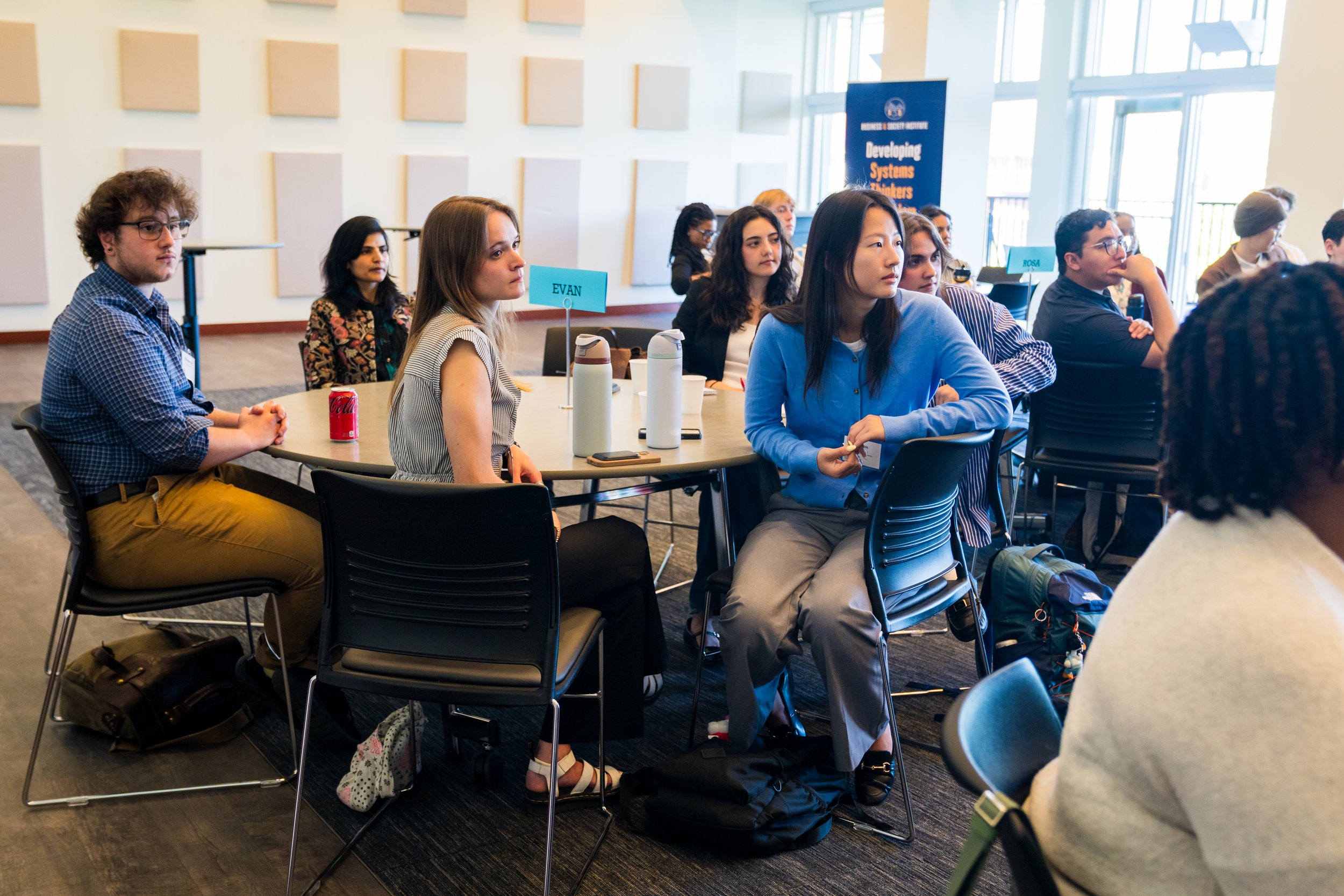
Evan represented the operational tensions surrounding material movement, vendor logistics, and sustainability infrastructure near major event sites. The team's guiding question asked: "How might Evan maintain vendor access to and from stadiums to ensure materials fueling sustainability initiatives are not inhibited by Atlanta traffic congestion during the World Cup and beyond?"
Students identified a core systems tension: sustainability infrastructure often fails not because the vision is wrong, but because the logistics required to support it become strained under pressure. Compost collection, reusable service ware, material recovery, and waste diversion systems all depend on reliable movement, coordination, and timing.
The Evan team proposed two major design levers:
1) A real-time coordination platform allowing vendors, operations teams, venue partners, and transportation agencies to align delivery schedules, routing, loading zones, and communications.
levers:
Evan: Rethinking Mobility, Congestion, and Sustainability Logistics
2) A sustainability logistics corridor model that would designate priority access windows and routes for vendors supporting waste diversion, composting, and material recovery efforts during high-volume event periods.
The team imagined a future where material flow systems are treated not as secondary operational concerns, but as foundational infrastructure enabling climate-smart outcomes.
Their work suggested that improving the movement and coordination of resources may be just as critical to circularity outcomes as recycling or composting systems themselves. It also reinforced opportunities for city leaders and corporate operators to pilot climate-smart logistics coordination strategies during the World Cup that could evolve into longer-term civic infrastructure over time. across systems already operating side-by-side.
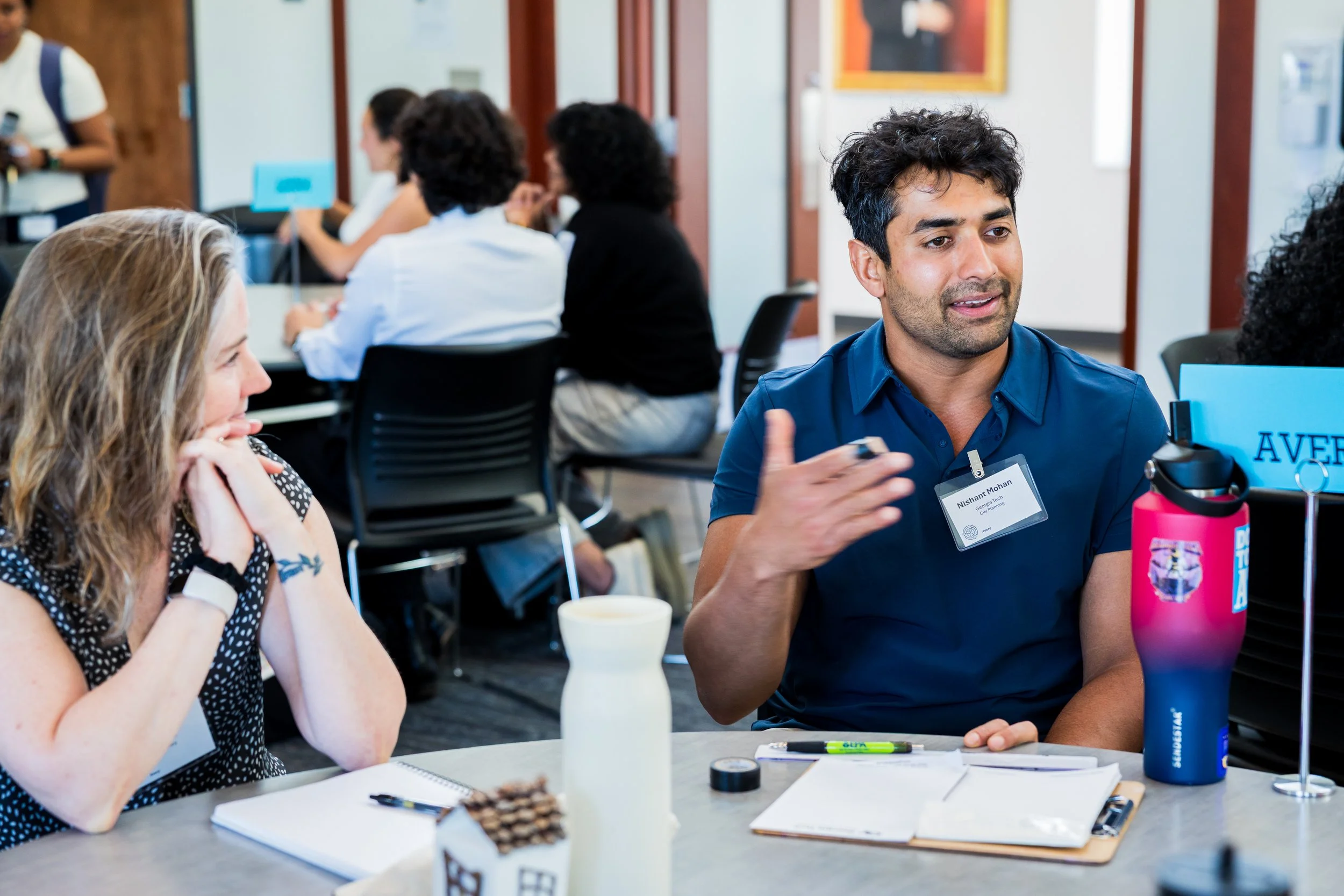
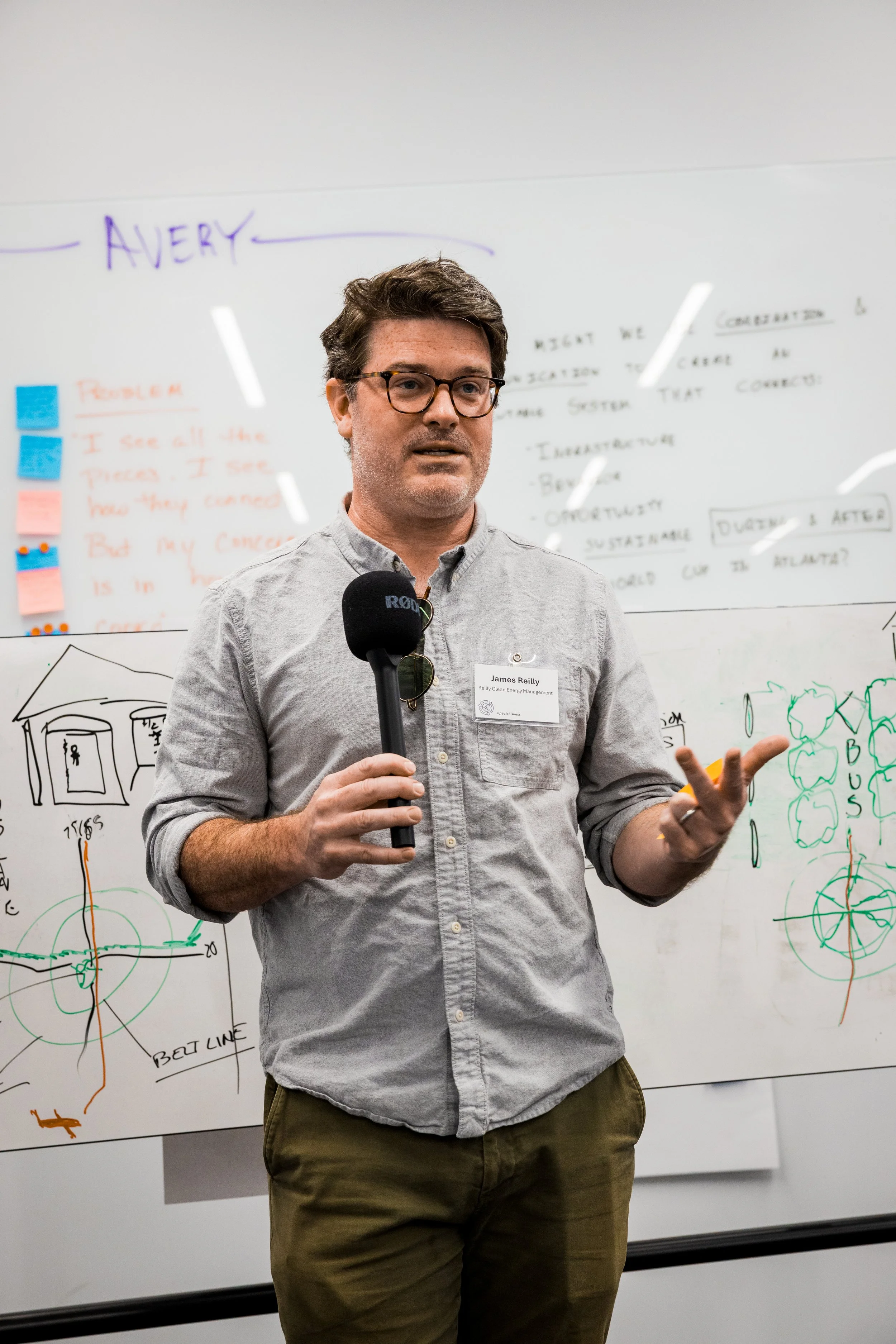
Avery represented one of the most complex tensions surfaced throughout the Challenge: the reality that cities are often governed through fragmented systems that rarely operate in true coordination with one another.
As the fictional Executive Director of the Georgia Regional Infrastructure Authority, Avery’s role sat at the intersection of transportation agencies, public infrastructure, sanitation systems, logistics operators, emergency services, and civic leadership.
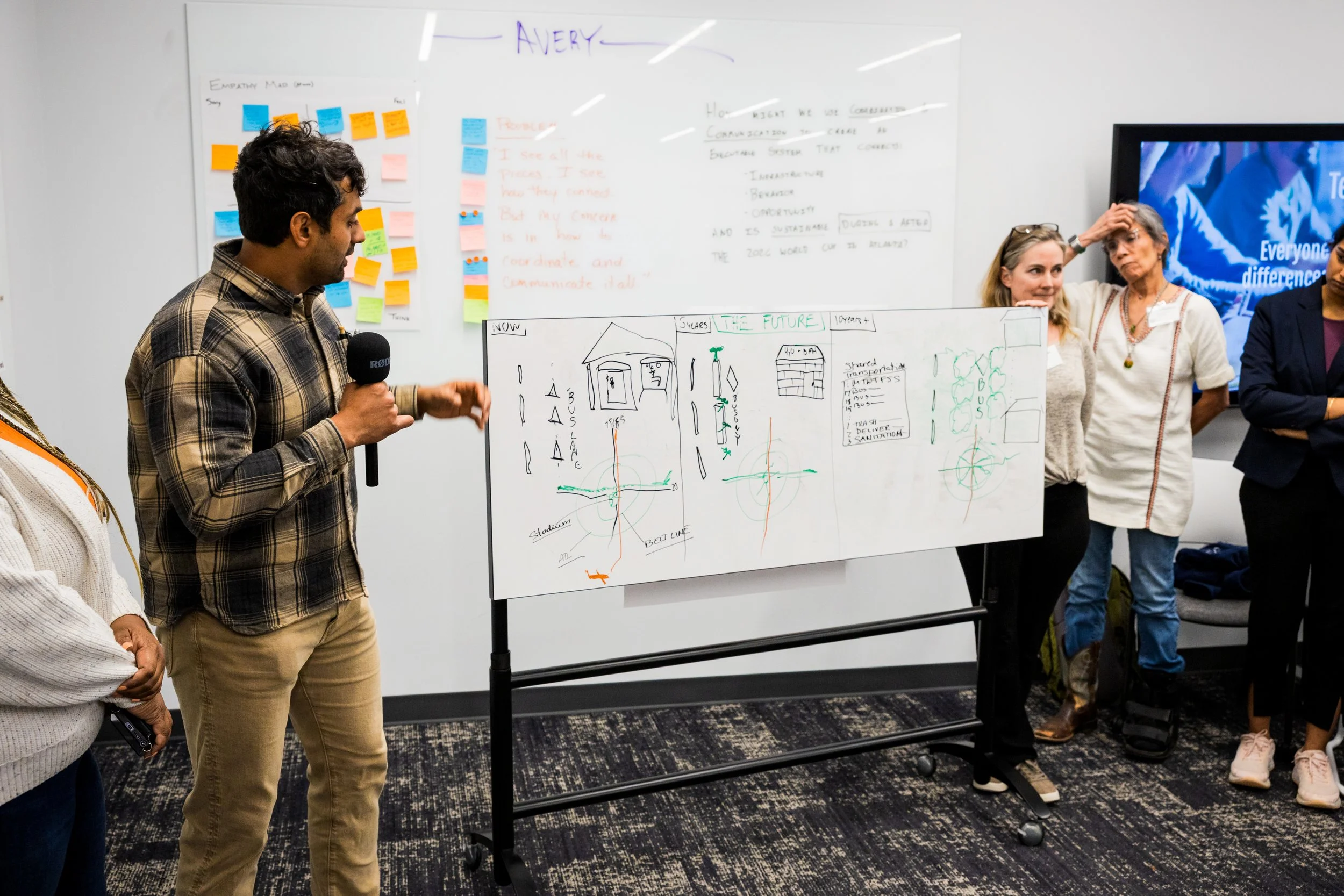
The team’s guiding question asked: “How might we use coordination and communication to create an executable system that connects infrastructure, behavior, and opportunity, and is sustainable during and after the World Cup?”
Students identified transportation infrastructure as the central systems leverage point.
Their prototypes focused on two interconnected design levers:
1) Dedicated multimodal transportation lanes
2) “Human hubs” positioned along those corridors
The transportation corridors were intentionally imagined as more than dedicated bus lanes.
levers:
Avery: Building Connective Infrastructure for a More Coordinated City
Teams envisioned flexible infrastructure routes capable of supporting buses, deliveries, emergency response, trash pickup, compost collection, and other forms of coordinated urban movement depending on the time of day and city needs.
Alongside those corridors, students proposed “human hubs” beginning as temporary structures with water refill stations, bathrooms, shaded gathering areas, and bus infrastructure before evolving into more permanent civic spaces integrated with expanded tree canopy coverage, local business activation, murals, and pedestrian-friendly mobility systems.
The Avery team imagined a future where mobility systems function less as isolated transportation projects and more as connective civic infrastructure capable of linking neighborhoods, sustainability operations, public transit, and economic activity together.
Their work reinforced the importance of connective infrastructure for public sector leaders, researchers, and sustainability practitioners alike. Many of the strongest ideas emerging from the workshop were not rooted in massive new infrastructure investments alone. They were rooted in improving coordination between transportation, sanitation, logistics, emergency response, and public space systems already operating beside one another.
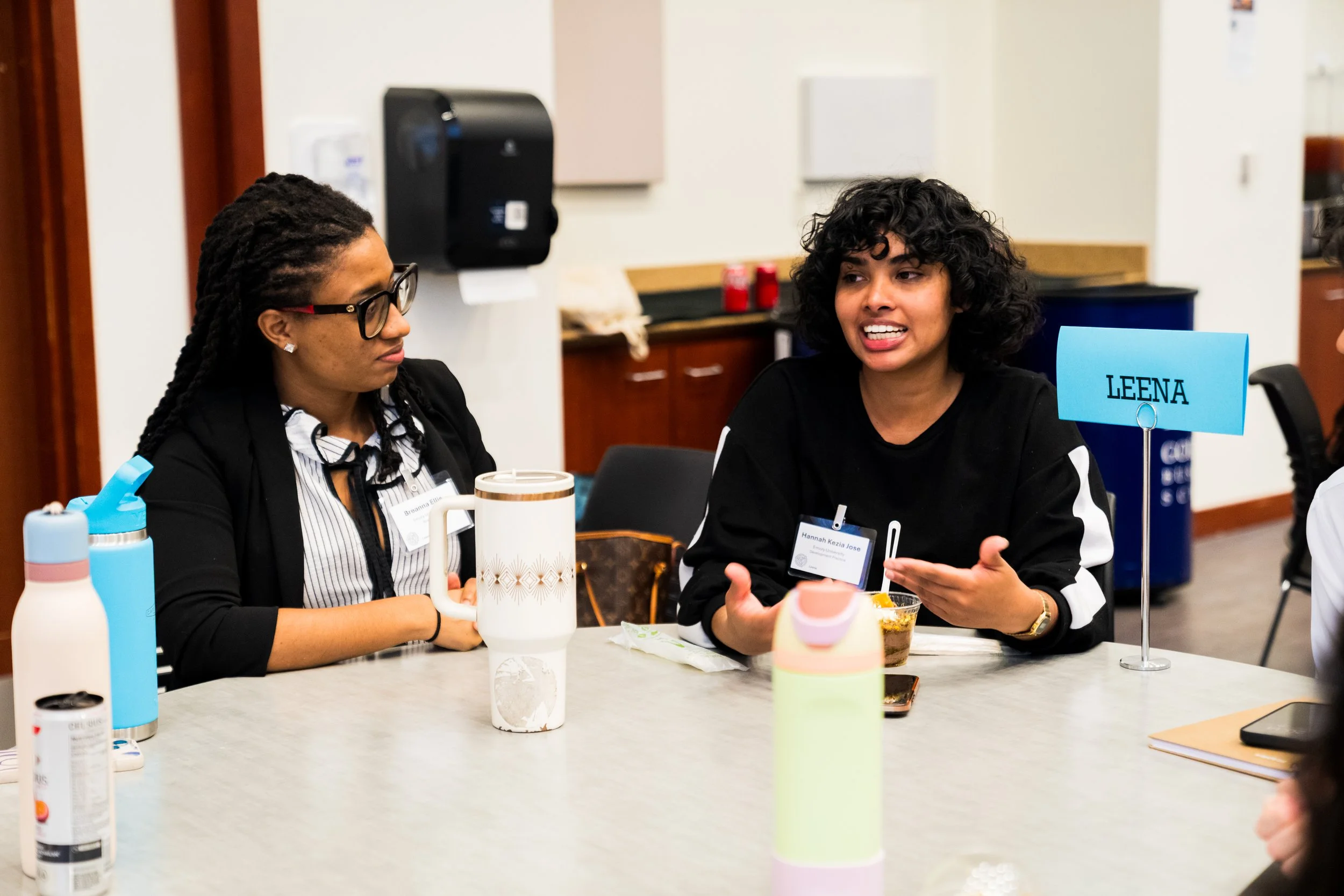
Leena represented the challenge of understanding and coordinating the many stakeholders shaping waste collection and diversion across Atlanta. Her team focused on the relationships between local government, host sites, businesses, researchers, community organizations, residents, and corporate partners whose decisions collectively influence waste outcomes.
Their guiding question asked: “How might we design research to understand waste collection and diversion during the World Cup to inform equitable solutions and policy afterwards?”
Students explored ideas including standardized waste data collection, stakeholder engagement strategies, partnerships between host sites and researchers, and systems for sharing insights across organizations.
Leena: Using Research to Build Better Waste Systems
As they mapped the ecosystem, participants recognized that many barriers to effective waste diversion stem not from technology alone, but from gaps in communication, coordination, and shared understanding.
The Leena team repeatedly returned to one core realization: better decisions require better information. Their future vision imagined Atlanta using the World Cup as a living laboratory to generate the data, partnerships, and insights needed to inform more equitable and effective waste policies long after the tournament concludes.
Toward Climate-Smart Futures
The workshop ultimately asked participants to imagine what Atlanta could become if coordination itself became a form of climate infrastructure.
Participants practiced a different posture toward the future itself. The experience encouraged systems awareness instead of siloed thinking, collaboration instead of isolated expertise, and experimentation instead of perfection. Again and again, the workshop returned to the same provocation: What if the future of climate-smart cities depends less on singular innovation and more on whether systems can finally learn how to adapt and respond at the speed complexity now requires?
As Brian Goebel reflected: “This is bigger than soccer or football. It’s bigger than a month. This is a catalyzing event that, if done right, can really change the future, not only for Atlanta, but the world.”
The experience concluded not only with systems prototypes and speculative futures, but with personal commitments to action. Participants filled the walls with reflections and intentions that grounded large-scale systems thinking back into everyday behavior and civic responsibility.
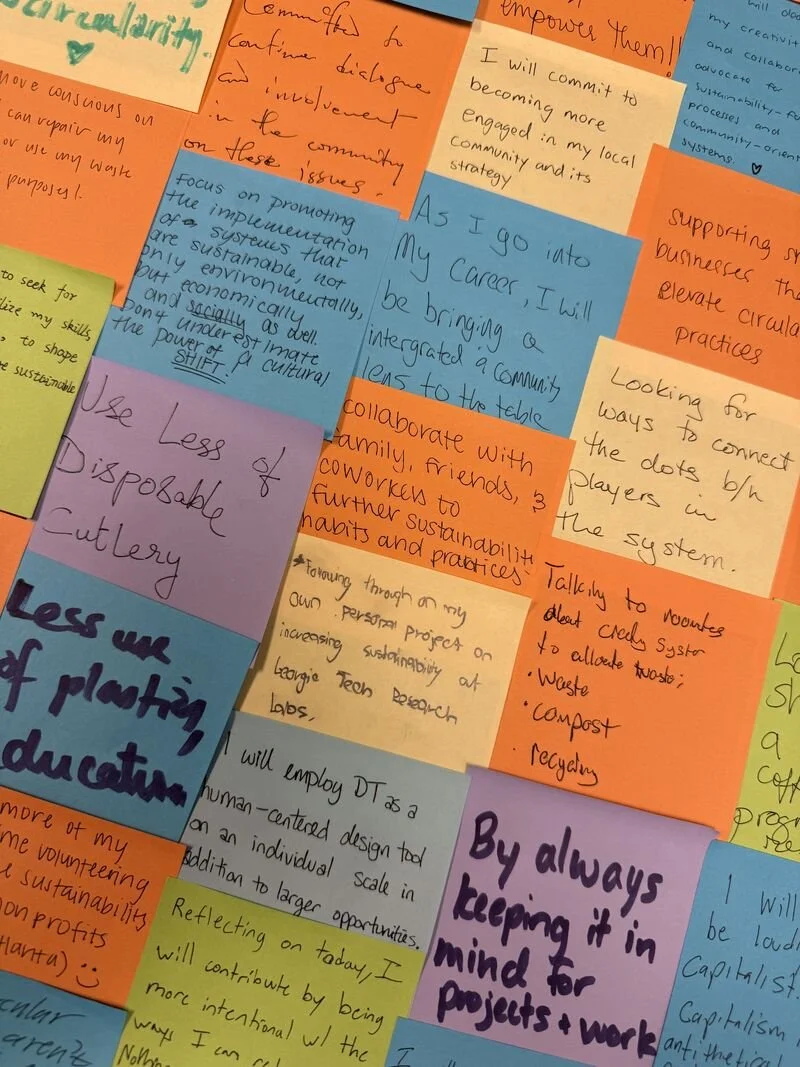
At the conclusion of the Challenge, participants also received Circular Futures Certification through Climate Design ATL, recognizing their participation in an emerging practice of climate-smart systems leadership rooted in collaboration, circularity, futures thinking, and human-centered systems design.
The Climate Design Challenge did not attempt to predict the future. It attempted to expand participants’ capacity to shape more climate-smart futures together. And perhaps that leaves a larger question for all of us:
How might moments of global visibility help cities build more connected and climate-smart futures?
5 Ideas for the Atlanta Community to Build Upon
A number of ideas and principles were generated by the Challenge for the Atlanta community to consider on their journey to strengthen climate-smart, circular systems that deliver long-term value for people, place, and planet.
Treat Coordination as Climate Infrastructure: The Challenge repeatedly surfaced that Atlanta’s biggest opportunity is not simply building new systems, but better connecting the ones that already exist. The World Cup could serve as a live pilot for stronger coordination between transportation, sanitation, composting, logistics, emergency response, businesses, and civic agencies to create more adaptive and resilient urban systems long after the tournament ends.
r1
2
Use the World Cup as a Real-World Testing Ground: Rather than treating the tournament as a one-time event, participants framed it as an opportunity to prototype climate-smart infrastructure, circular logistics, mobility systems, procurement strategies, and public engagement models that could later scale across the city. The month becomes a launchpad for longer-term systems transformation.
rMake Circularity Visible, Accessible, and Participatory: Participants emphasized that circular systems only work when people can easily understand and participate in them. The World Cup creates an opportunity to normalize composting, reuse, refill systems, transit adoption, and sustainable behaviors through multilingual communication, public education, and visible civic infrastructure embedded throughout the city experience.
r3
4
Design for Human Experience and Climate Resilience Simultaneously: The strongest ideas emerging from the Challenge connected climate resilience directly to everyday quality of life. Participants imagined mobility corridors, shaded gathering spaces, refill stations, public transit access, and community-centered infrastructure that support both environmental goals and human wellbeing during the World Cup and beyond.
rBuild Systems That Last Beyond the Event: Again and again, teams returned to the same core idea: success should not be measured by whether Atlanta hosts a sustainable month, but by whether the city uses this moment to build more connected, climate-smart systems that continue delivering value for residents, businesses, and communities for years to come.
r5
Resources for Further Learning and Engagement
Human-Centered Design
The Challenge asked students to design solutions that were grounded in the lived experiences of real people. Human-Centered Design (HCD), a problem-solving approach that starts with deep empathy for the people you're designing for, was the central framework leveraged.
A few recommended primers on HCD:
The Double Diamand Design Process (Design Council): A simple way to describe the steps taken in any design and innovation project, irrespective of methods and tools used
Design Kit Methods (Design Kit / IDEO): A step-by-step guide to unleashing your creativity, putting the people you serve at the center of your design process to come up with new answers to difficult problems.
Design Kit Mindsets (Design Kit / IDEO): More about the philosophy behind creative problem solving including details on how you think directly affects whether you'll arrive at innovative, impactful solutions.
Circularity
The Challenge was focused on transforming the traditional “take–make–waste” model present in much of today’s economy to be circular. Circular systems reduce emissions and / or waste, lower costs, create new jobs and markets, and improve resilience and equity in cities.
A few recommended primers on circular economy: